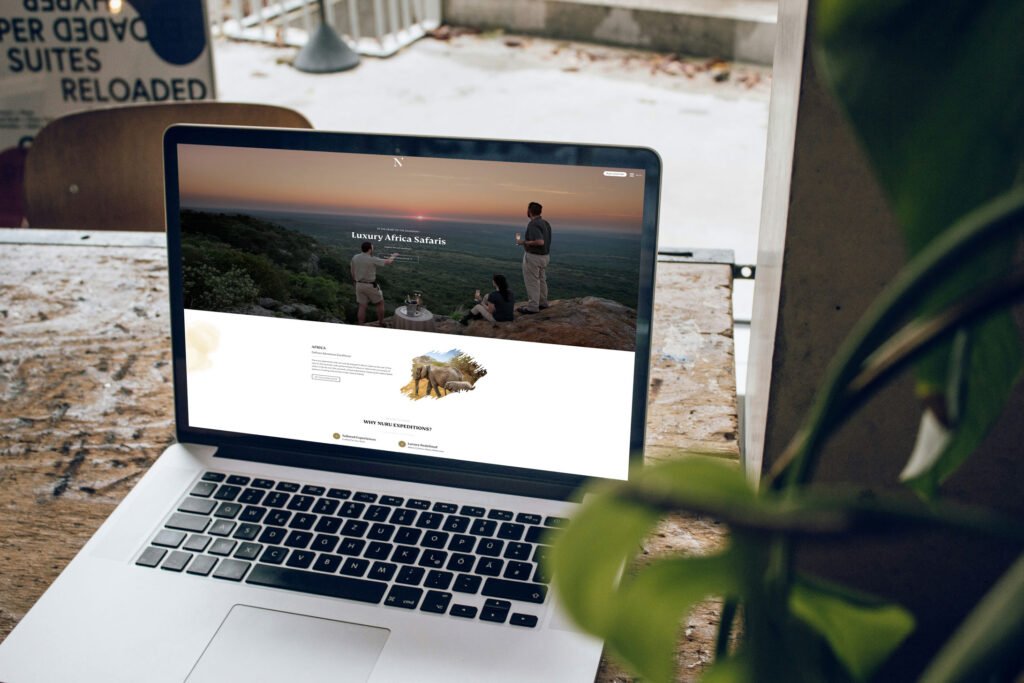
A traveller planning a safari, a Kilimanjaro climb or a Zanzibar holiday usually compares several companies before sending a single enquiry. They can’t visit your office or meet your guides first, so your website has to do the convincing. Good travel agency website design isn’t about decoration. It’s about helping a stranger on the other side of the world trust you enough to ask for a quote.
We design websites for tour operators, safari companies and lodges in Tanzania, and the same patterns show up again and again in the sites that win enquiries. Here are 12 ideas you can use, whether you’re planning a new website or improving the one you have.
1. Lead with the experience, not the company
Your home page has a few seconds to show visitors what kind of trips you run. Open with a strong photo or short video from a real trip, a one-line promise such as “Private safaris in Tanzania, planned around you”, and a clear button to see your tours or plan a trip. Save the company history for your About page.
2. Use your own photography
Stock photos of lions look the same on every safari website. Photos from your own trips, guides, vehicles and guests show travellers what they will actually get, and they build a kind of trust that stock images can’t. If you don’t have good photos yet, plan a shoot on your next few departures. It’s one of the best investments you can make in your website.
3. Make itineraries easy to scan
Itinerary pages are where travellers make up their minds. Give each tour a clear title, length, starting point and a “from” price if you can share one. Then lay the trip out day by day, with a short description, photos and where guests sleep each night. Keep the key details near the top so nobody has to hunt for them.
- Trip length and route at a glance
- A day-by-day plan with photos
- Accommodation for each night
- What’s included and what isn’t
- A price guide, or “price on request”
4. Let travellers filter your tours
If you offer more than a handful of trips, help visitors narrow them down by length, type (safari, trekking, beach or cultural), budget or destination. A simple filter saves them time and keeps them on your website instead of heading back to Google.
5. Keep the enquiry form short and specific
Most safari bookings start with a tailor-made enquiry, so your form matters more than any other part of the site. Ask only for what you need to send a good first reply: name, email, travel dates or month, number of travellers and a box for their wishes. Long forms with a dozen required fields put people off. Put the form on every tour page, not just on your contact page.
6. Add WhatsApp and quick contact options
Many travellers would rather send a quick message than fill in a form. A WhatsApp button, a clickable phone number and an email address on every page give them that choice. Make sure someone replies quickly, because a fast first answer is often what wins the booking. If you can’t always answer straight away, an AI assistant can handle common questions out of hours and pass the conversation to your team.
7. Show proof that you’re real and trusted
Travellers worry about booking with a company they’ve never heard of. Put trust signals where they make decisions: reviews from past guests with names and a link to where they were posted, your tourism licence and association memberships, photos of your team and vehicles, and your office address. Reviews on independent sites count for far more than quotes with no source.
8. Design for phones first
A lot of travel research happens on phones, often in short moments during the day. Your pages should be easy to read without zooming, buttons should be big enough to tap, and the enquiry form should work smoothly on a small screen. Test every important page on a real phone before you launch.
9. Keep your website fast
Large, unoptimised photos are the most common reason travel websites load slowly. Resize and compress your images, use modern image formats and choose reliable web hosting. Speed matters for visitors on mobile data, and it matters to Google too.
10. Write for the searches travellers make
Travellers search for specific trips, such as “7 day Tanzania safari”, “Kilimanjaro Machame route” or “Serengeti migration safari in July”. Give each popular trip its own page with a clear title and description. Then write helpful guides that answer the questions people ask before booking, like the best time to visit, what to pack or how much a safari costs. Our SEO services can help you plan and write them.
11. Make prices and policies clear
Uncertainty stops people from enquiring. Even if every trip is tailor-made, share guide or “from” prices where you can and explain what changes the price. Make your booking terms, deposit and cancellation policy easy to find. Travellers who understand how booking works are more likely to get in touch.
12. Make it easy to update
Prices change, new itineraries launch and seasons shift. If every small change needs a developer, your website soon falls out of date. Build it on a system like WordPress, where your team can add tours, edit prices and publish blog posts themselves.
Travel websites we’ve built
See how these ideas come together on real projects: Nuru Expeditions, a premium website for bespoke African safaris; Kirimu Camps, which showcases luxury safari camps; Sarafu Travel, built to turn visitors into qualified enquiries; and Entrance Tanzania Safaris. You can browse more in our portfolio.
Quick checklist for your travel website
- A clear promise and a “plan your trip” button on the home page
- Your own photos from real trips
- Itinerary pages with day-by-day details and prices
- A short enquiry form on every tour page
- WhatsApp, phone and email on every page
- Real reviews, licences and memberships on show
- Fast, mobile-friendly pages
- A page for each popular trip, plus helpful travel guides
- Clear prices, booking terms and cancellation policy
- Easy for your team to update
Need a website that fills your trips?
Red Chapter designs websites for tour operators, safari companies, lodges and travel agencies. Find out more about our tour operator website design service, or get a free quote for your project.